ISO 27001 Certification Process
Achieving ISO 27001 Certification
Achieving ISO 27001 certification is more than a one-time assessment—it is a comprehensive process designed to build and maintain a strong Information Security Management System (ISMS). From readiness assessments and risk analysis to certification audits and ongoing compliance, each step helps organizations strengthen security, reduce risk, and demonstrate their commitment to protecting sensitive information. The process outlined below provides a roadmap to achieving and maintaining ISO 27001 certification with confidence.
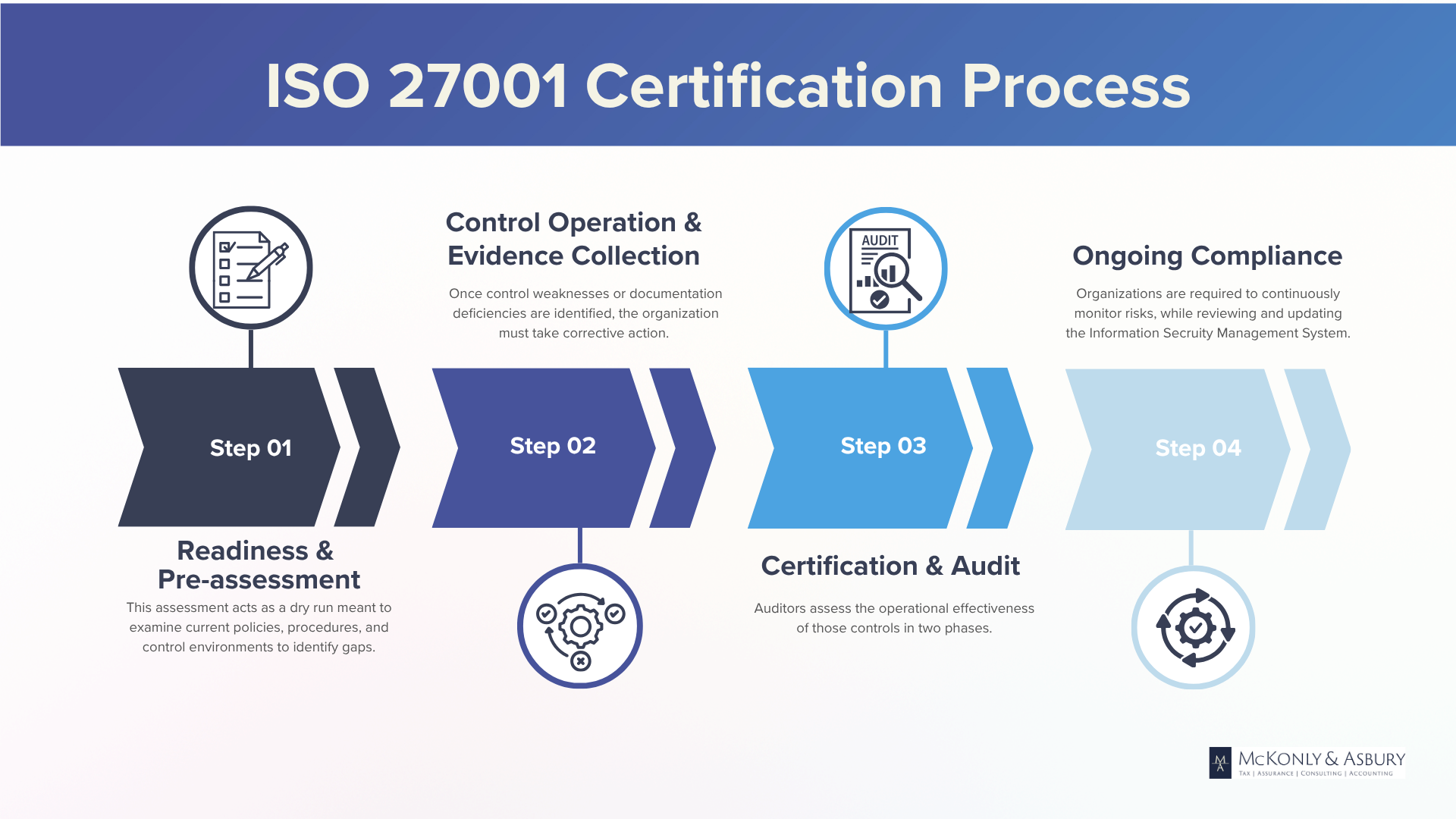
Step 1: Readiness and Pre-Assessment
Readiness and Pre-Assessment are paramount to successfully completing your ISO 27001 certification. The readiness and pre-assessment can be systematically broken into several phases prior to moving on to step 2 of the ISO process.
- Phase 1: Identifying the Information Security Management System Scope
- Phase 2: Perform risk assessment and gap analysis with ISO 27001 requirements
- Phase 3: Document risk response and statement of applicability
- Phase 4: Implement controls including policies and security practices in response to identified risks and eliminate the gaps in ISO 27001 requirements
Step 2: Control Operation and Evidence Collection
Collecting and maintaining evidence to show implementation and operating effectiveness of policies and controls relevant to the ISO 27001 requirements. This includes information security policy, training records, information security plans, audit programs and reports, management review of all evidence and ISO 27001 security measures (Annex A: 93 security measures) evidence.
Step 3: The ISO 27001 Certification and Audit
The certification audit is performed by an external auditor who will examine and review your Information Security Management System in typically two phases. Upon successful completion of both phases the organization will receive an ISO 27001 certification covering a 3-year period.
- Phase 1: Document and Evidence Review: The auditor examines the organization’s Information Security Management System to ensure it is designed and documented to meet the ISO 27001 requirements
- Phase 2: External Audit – The external auditor will examine policies and controls through inquiry, examination, reperformance and observation to ensure that they have been implemented and are operating effectively.
Step 4: Ongoing Compliance
ISO 27001 requires that the organization continuously monitor risks, while also reviewing and updating the Information Security Management System to mitigate those risks. ISO 27001 requires the following on-going compliance programs. Interim audits by the certification body to ensure the company maintains compliance, internal audits by the organization to identify and remediate controls failures, and recertification audits every 3 years to maintain ISO 27001 compliance.
Industry Involvement

ISO 27001 Solutions
How Can We Help?
Whether you’re preparing for certification or enhancing an existing ISMS, our team provides the expertise and support needed to meet ISO 27001 requirements.
- Readiness and Pre-Assessments
- ISO 27001 Certification and Audit
- Ongoing ISO 27001 Compliance