
Buy-Sell Agreements
Protecting the Value and Legacy of Your Business
Many closely held businesses operate under a buy-sell agreement. These agreements define what happens when a triggering event occurs, such as retirement, divorce, disability, death, or voluntary exit. At their best, they clearly outline the purchase terms, establish how the business will be valued, and define how the buyout will be funded.
Not every business, however, has a formal agreement. Without one, ownership transitions may be governed by state law rather than your intentions. Even when an agreement exists, it may not reflect how the business operates today.
As companies grow, add shareholders, or take on new obligations, valuation language and funding assumptions often need to be revisited. That work happens alongside legal counsel, with a CPA and valuation professional evaluating whether the financial terms are clear, defensible, and aligned with current performance.
With the right financial guidance, a buy-sell agreement becomes part of your broader business strategy. It supports ownership transitions that are deliberate, realistic, and grounded in the financial realities of the business.
Gain peace of mind through structured ownership planning.
Experience. The Difference.
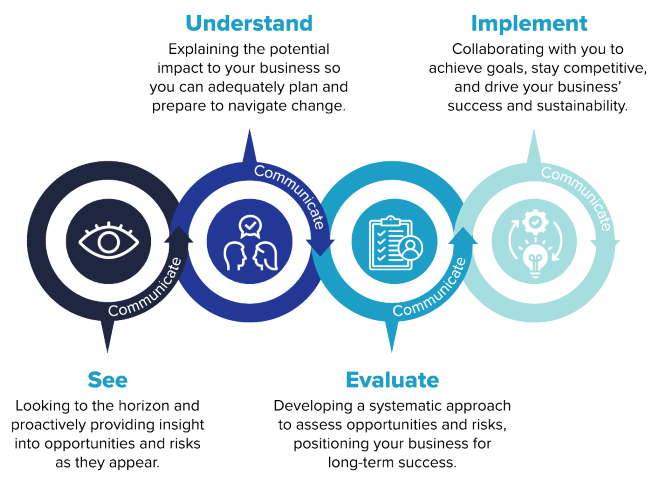
Foundation for Success
Open communication shapes every step of the process. We work alongside you and your business partners to review options, talk through implications, and weigh financial decisions together. This shared approach helps establish agreement terms that reflect both the business and the people involved.
Buy-Sell Agreement Frequently Asked Questions
Ideally, a buy-sell agreement is established when the business is formed or when new owners are added. It is best practice to agree on terms before a triggering event occurs.
Agreements are typically reviewed every one to three years, or when there is a change in ownership, financial performance, or business structure.
Without an agreement, ownership interests may transfer based on state law or estate plans. This can lead to unintended owners, disputes over value, and delays in completing a transaction.
The agreement may set a fixed price, use a formula, but best practice requires an independent valuation at the time of the event.
Funding may come from company cash, installment payments, financing, or life/disability insurance proceeds. Many agreements include multiple funding sources.
Cash flow modeling is used to evaluate whether the buyout terms are realistic. This determines if the business can support the required payments, even under different conditions.
Legal counsel drafts the agreement and ensures it complies with applicable law. A CPA with valuation credentials (such as ASA, CVA, CFA, or ABV) evaluates the financial provisions, including the standard of value, valuation methodology, funding structure, tax considerations, and can perform cash flow modeling. This helps ensure the agreement is financially sound and can be carried out as intended.
Buy-Sell Agreement Solutions
How Can We Help?
By leveraging our buy-sell advisory services, you gain financial guidance designed to strengthen the valuation and funding components of your agreement. Our services include:
- Buy-sell financial consulting (in coordination with legal counsel)
- Business valuation
- Cash flow modeling and scenario analysis
- Funding strategy
- Tax structuring
- Transaction advisory
- Coordination with third-party advisors